
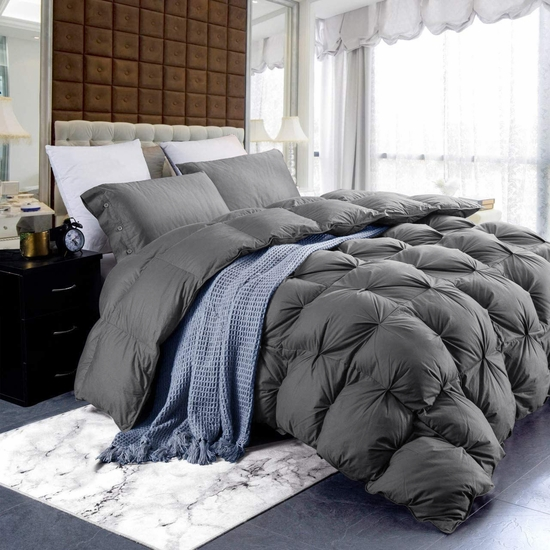
Most shoppers judge a comforter by pressing a hand into it at the store. That first impression feels reliable but it rarely is. A luxury down comforter can feel identical to a mediocre one under a five-second touch test, because loft in the showroom says nothing about how the fill will behave after six months of body heat and compression.
The specifications printed on the label carry the real information. Fill power, fill weight, shell construction, and thread quality determine whether a luxury down comforter sleeps cool in June and warm in January. Learning to read those numbers turns a guessing game into a side-by-side comparison, and it protects a purchase that should last well past a decade.
The Comfort Signal That Misleads Most Buyers
Loft Fades Faster Than It Impresses: Softness and loft measure how a comforter feels on day one, not how it performs across years of use. Cheaper down clusters are smaller and more fragmented, so they collapse under body weight and lose the air pockets that hold warmth. The comforter still looks full. The insulation quietly thins from the inside.
Delayed Replacement Costs More Than the Comforter: Bedding professionals routinely see customers who slept under a flattening comforter for three or four winters before replacing it, layering extra blankets to compensate. Those layers trap moisture and disrupt rest. The importance of sleep in daily health makes that delay expensive in ways a receipt never shows.
Fill Power and Fill Weight Decide the Warmth Equation
Fill Power Measures Loft, Not Quantity: Fill power records how many cubic inches one ounce of down expands to fill, which makes it a measure of cluster quality rather than volume. Ratings of 600 to 700 suit most bedrooms. Anything at 800 or above delivers more warmth per ounce, producing a luxury down comforter that insulates without pressing down on the sleeper.
Fill Weight Sets the Actual Warmth Level: Fill weight is the total ounces of down inside the shell, and it decides how warm the finished comforter sleeps. High fill power paired with low fill weight gives a light summer layer. The same fill power with heavier ounces produces winter warmth. Matching both numbers to a bedroom’s climate prevents overheating.
Shell Fabric and Stitching Shape Everyday Performance
Weave Density Matters More Than Thread Count: The shell has two jobs, holding fine down inside and letting body moisture escape. Tightly woven cotton with a thread count near 300 to 400 blocks leakage while maintaining vapor permeability, so heat and humidity move outward instead of collecting. Very high thread counts often feel heavier and breathe worse.
Baffle Box Construction Keeps Down in Place: Baffle box construction uses internal fabric walls to create three-dimensional chambers that let down expand to full loft. Sewn-through stitching presses the top and bottom layers together and creates cold seams along every line. That difference shows up on the coldest nights, when thin spots become obvious. Baffling costs more to manufacture for a reason.
Down Compared With Feather and Synthetic Fills
Down Outperforms Feather on Weight and Drape: Down clusters trap air in a three-dimensional structure, while feathers are flat with rigid quills that add weight and can work through the shell. Feather blends cost less and serve budget bedding well. They compress faster and sleep heavier, and the soft drape over the shoulders is usually missing.
Synthetic Fill Wins on Price and Washability: Synthetic microfiber comforters wash easily at home and suit households with severe allergies or tight budgets. The trade-off is real. Polyester fibers hold moisture against the body, flatten within a few seasons, and need replacing far sooner. Cleaned properly, down retains its loft for fifteen years or longer.
Specifications Worth Comparing Side by Side
Comparing two comforters becomes simple once the label is decoded. Shoppers evaluating a luxury down comforter should line up the same handful of figures across every option instead of trusting phrases like ultra-plush or hotel quality. These details separate genuine construction from products built to feel impressive for one showroom minute.
- Fill power below 600 signals smaller clusters that flatten within a few seasons.
- Two comforters with matching fill power can sleep decades apart in warmth if the fill weight differs.
- Baffle box chambers hold loft evenly, while sewn-through seams leave cold lines across the bed.
- Certification for cleanliness and origin confirms the down was processed to a verified standard.
- Corner loops matter more than they sound, because a duvet cover that shifts all night undoes good construction.
Value That Compounds Over a Decade of Use
Origin Documentation Protects the Purchase: Reputable manufacturers document where their down comes from and how it was cleaned, and supply chain traceability separates verified fill from vaguely labeled imports. Certifications covering animal welfare and processing standards give buyers something checkable. Without that paper trail, claims about cluster size and fill power rest on the seller’s word alone.
Cost per Night Reverses the Price Argument: A well-made comforter used nightly for fifteen years costs pennies per night, while a cheap replacement bought every three years adds up to more. Careful quality assurance at the manufacturing stage makes that lifespan realistic. Storage habits and a washable duvet cover stretch it further still.
Better Nights Begin With Better Specifications
The right comforter disappears in use. It holds warmth without weight and moves moisture away instead of trapping it against the skin. Cheaper bedding goes flat while it stays lofted. That quiet reliability comes from numbers printed on a label, not from how a display model feels under a hand in a store aisle.
Every season spent under a collapsing comforter is a season of broken sleep that extra blankets never fix, and the cost accumulates quietly until better bedding replaces it. Compare fill power, fill weight, and shell construction before buying, then speak with a bedding specialist who can match those numbers to your climate and help you order the right set for your bed.