
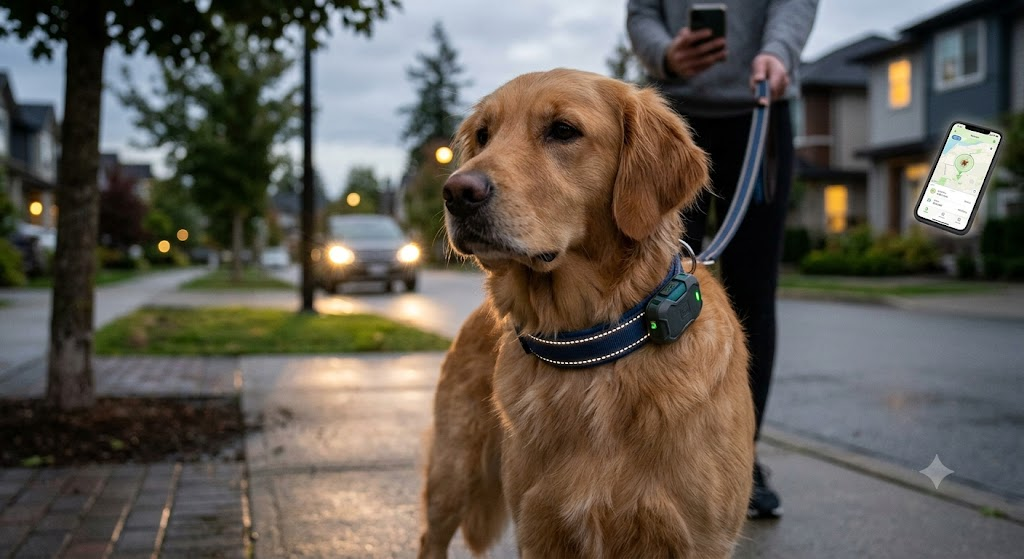
Anyone who has ever witnessed their pet dash off chasing a squirrel, or taken them home through the darkness with cars coming out of nowhere, would understand the feeling of anxiety it creates for a few seconds when it feels like your pet is completely lost in those moments, wondering whether the driver can even see your dog or not..
That’s the gap smart collars are trying to close. Instead of just holding an ID tag, they now pack in GPS, activity tracking, and reflective materials, turning a basic strap of leather into something closer to a safety system you wear on your dog’s neck.
Source : Gemini
So what actually makes a collar “smart”?
Basically, electronics. A dog collar with gps tracker talks to an app on your phone and feeds you information in real time — where your dog is, how active they’ve been, sometimes even how well they slept.
Most of them lean on a mix of the following:
- GPS or Bluetooth for live location tracking
- Geofencing, so you get an alert the moment your dog wanders past a boundary you’ve set
- Activity sensors tracking steps, sleep, and rough calorie burn
- Reflective stitching or LED lights for visibility after dark
- Batteries that last a few days, sometimes solar-assisted
None of these features is new on its own. What’s changed is that they’re now bundled into one device, which is really what makes these collars worth talking about.
Why GPS actually matters here
Dogs don’t need much of an excuse to run. A gate left open a few inches, a thunderclap, a cat crossing the yard — and suddenly your very good boy is three blocks away. A GPS collar means you’re not left guessing; you open the app and see exactly where they are, often with location pings every few seconds.
Some of the better models go further, offering:
- A history of where your dog has been throughout the day
- Alerts if your dog is suddenly moving much faster than normal (a decent sign they’re chasing something or being chased)
- Warnings before the battery dies, so you’re not left tracking a dead device
One suburban dog owner used exactly this kind of collar to find their beagle within minutes after it slipped its leash — a search that, without a tracker, could easily have eaten up an entire afternoon.
Reflective gear: the part that stops accidents before they start
GPS helps you find a dog that’s already gone missing. Reflective gear is trying to prevent that scenario from ever needing GPS in the first place — mainly by making sure drivers and cyclists actually see your dog during early morning or late-night walks, when visibility is worst.
This usually comes down to a few things:
- Reflective thread woven into the collar that catches headlights
- LED lights that glow or blink
- High-contrast colors like neon yellow or orange for daytime visibility
None of it is flashy technology, but in a poorly lit neighborhood without sidewalks, it can genuinely be the difference between a close call and a tragedy.
GPS collar or reflective-only? A quick breakdown
| Feature | GPS Smart Collar | Reflective-Only Collar |
| Real-time location tracking | Yes | No |
| Nighttime visibility | Sometimes (with LED add-ons) | Yes |
| Requires battery | Yes | No |
| Typical cost | Higher | Lower |
| Best suited for | Dogs prone to escaping or roaming | Regular evening walkers |
| Connects to an app | Yes | No |
Picking the right one for your dog
There’s no single “best” collar — it really depends on your dog’s size, energy, and how they tend to get into trouble. A few things worth weighing before you buy:
- Size and weight — a bulky tracker on a small dog is going to be uncomfortable fast
- Battery life — aim for at least 2–3 days between charges
- Water resistance — non-negotiable if your dog swims or you walk regardless of weather
- Subscription costs — many GPS collars come with a monthly data fee, similar to a phone plan
- Comfort — If the collar is irritating to your dog, then there will be ways for him to not wear it anymore, and therefore the purpose is defeated.
It’s worth testing a collar on a short walk before committing your dog to wearing it full-time. Comfort issues show up fast.
There’s more to it than just safety
In addition to its emergency use, many dog owners realize that their dogs’ data becomes highly valuable as well. Activity monitoring allows you to track the level of your dog’s physical activity while alterations in the sleep schedule may be a good indicator of some issues. Some veterinarians ask about these indicators as they provide a much more truthful insight into the dog’s daily routine than just one visit.
The bottom line
Smart collars aren’t solving a new problem — dogs have always run off, and roads have always been dangerous in the dark. What’s changed is that a dog collar with gps tracker and reflective materials now come bundled into a single, practical device, addressing both risks at once. And as a bonus, you get a window into your dog’s health and activity that you wouldn’t otherwise have. Which collar makes sense for you really comes down to your dog’s habits, where you live, and what you’re most worried about.
FAQs
Do smart collars need a monthly subscription?
Most GPS-based ones do, similar to a phone data plan. Bluetooth trackers usually skip this cost.
Is reflector gear all you need?
Reflective gear makes your dog visible to others, but will not help you locate one that is missing. Using both ensures you get maximum protection.
What is the battery life of a GPS pet collar?
Usually 2 to 5 days after charging. This depends on the frequency of ping with your phone.
Are there any that don’t require a smartphone?
Yes, a number of these don’t need smartphones at all. However, they can only track using a browser.
Are these available for cats?
Yes, there are some companies that produce special GPS collars for cats.