
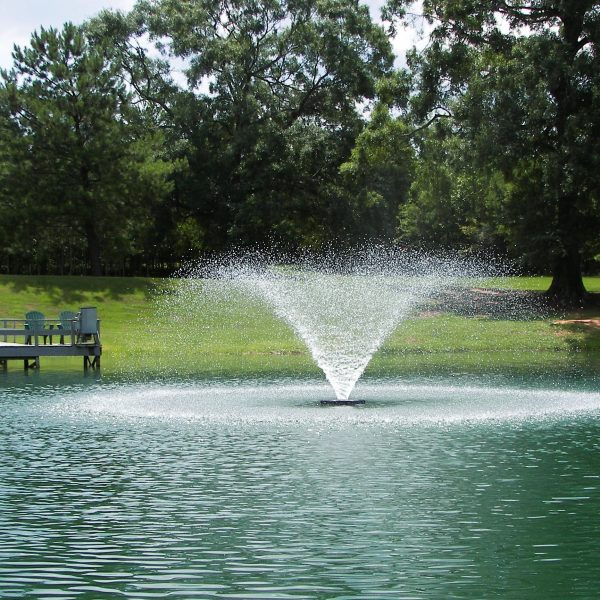
Most buyers start with horsepower and stop there when choosing a fountain for their water body. The bigger number feels like the safer bet, and the product listing rarely explains what it actually delivers in the water. A floating fountain that overpowers a small pond stirs sediment and soaks the bank, while an undersized one leaves half the surface untouched all summer.
Matching matters more than raw power. A floating fountain sized to your pond’s surface area and depth gives you a display that holds its shape and water movement that reaches every corner of the pond. That pairing improves appearance and circulation at the same time, and it almost always costs less to run month after month.
Power Alone Does Not Match a Pond
The Number on the Box Measures the Motor: Horsepower describes the motor, not the water it moves. Units advertised at one horsepower frequently deliver output closer to a third of that once the pump is measured honestly against real conditions. Net flow rate, the volume actually lifted and returned each minute, predicts aeration and display quality far more reliably than any motor rating.
Oversizing Creates Its Own Problems: Pond managers who assess underperforming water features routinely find units chosen on price and horsepower rather than fit. Too much lift in shallow water pulls up bottom sediment, raising total dissolved solids and clouding the pond the owner wanted to showcase. Drifting spray then lands on lawns, walkways, and anything parked nearby.
Pond Size Sets the Limits Before Anything Else
Surface Area Decides Coverage: Surface acreage determines how much water a single unit can turn over in a day. A half-acre pond and a three-acre lake call for entirely different flow, and one unit rarely serves the larger water on its own. Measuring length and width at the widest points gives a workable figure before shopping starts.
Depth Changes What the Pump Can Do: Water depth beneath the float controls intake quality and how far circulation spreads. Ponds under four feet suit lower-lift units that move volume without disturbing the bottom. Deeper water holds cooler layers that surface spray never reaches, which is where a trophic state index reading tells you more than a product photo ever will.
https://www.fountaintechpumps.com/wp-content/uploads/2023/03/3400aerator-300×300.jpeg
Spray Pattern and Flow Rate Pull in Different Directions
Tall Plumes Trade Away Volume: A tall, narrow plume looks dramatic from the bank and moves comparatively little water. Wide patterns such as trumpet and crown shapes push far more volume across the surface at lower height, which serves aeration better. Choosing the pattern first and checking flow afterward leads to disappointment in most working ponds.
Flow Rate Tracks With Oxygen: Gallons per minute at the nozzle is the figure that tracks with oxygen transfer, because aeration happens where water breaks into droplets and falls back through air. A floating fountain rated on measured flow keeps fish healthier through hot months than one sold on motor size, whatever the label claims.
Decorative Display or Aeration Duty
Decorative Units Prioritize the View: Decorative fountains are built around pattern quality, nozzle variety, and lighting options. They suit ornamental ponds, courtyards, and entrance features where the water stays healthy on its own or receives separate treatment. The trade-off is modest oxygen transfer, so a stocked pond may still need help moving water below the surface.
Aerating Units Prioritize the Water: Aerating fountains move high volume in a low, wide pattern designed to circulate the full basin. They look less theatrical up close and earn their place where fish, algae, or summer odor are real concerns. Some models split the difference with interchangeable nozzles, though display height stays below a purely decorative unit.
https://www.fountaintechpumps.com/wp-content/uploads/2022/12/Kasco-New-3400-Birch-1-600×600.jpg
What a Correct Match Saves You Over Ten Seasons
Running Costs Compound Quietly: An oversized unit draws power every hour it runs, and the difference compounds across a full season of continuous operation. Right-sizing usually cuts the monthly bill without reducing the visible display, because the wasted energy went into lifting water higher than the pond ever needed it lifted.
Delay Narrows the Options: Postponing the decision lets organic matter settle and thicken, and a pond carrying several seasons of muck needs more than a fountain to recover. A floating fountain installed before conditions decline holds clarity at a fraction of what dredging or repeated chemical treatment costs later on.
What to Confirm Before You Buy
A few measurements taken before shopping prevent most sizing mistakes. Surface area, maximum depth, main viewing angle, and power access shape the decision more than any feature list on a product page. Pond owners who gather these numbers first tend to buy once rather than twice.
- Measure surface area at the widest points and record maximum depth separately.
- Compare units on published flow rate rather than horsepower alone.
- Decide whether display height or water movement leads your priority list.
- Check that the nozzle spray radius stays well inside the bank line.
- Confirm cord length and power access before the unit ships.
The Pond You Want Starts with the Right Fit
Appearance and water quality stop competing once the unit fits the water it sits in. A correctly matched fountain holds its shape in wind, keeps the shallows clear through summer, and runs at a cost you can plan around rather than dread. Another season of guessing means another season of sediment settling where nothing moves.
Pond dimensions, fish stocking, and display goals pull in different directions, and the workable compromise depends entirely on the water in front of you. A specialist who can review your measurements and flow requirements will narrow the choice quickly and honestly. Reach out for a sizing assessment before your next install goes in the water.