
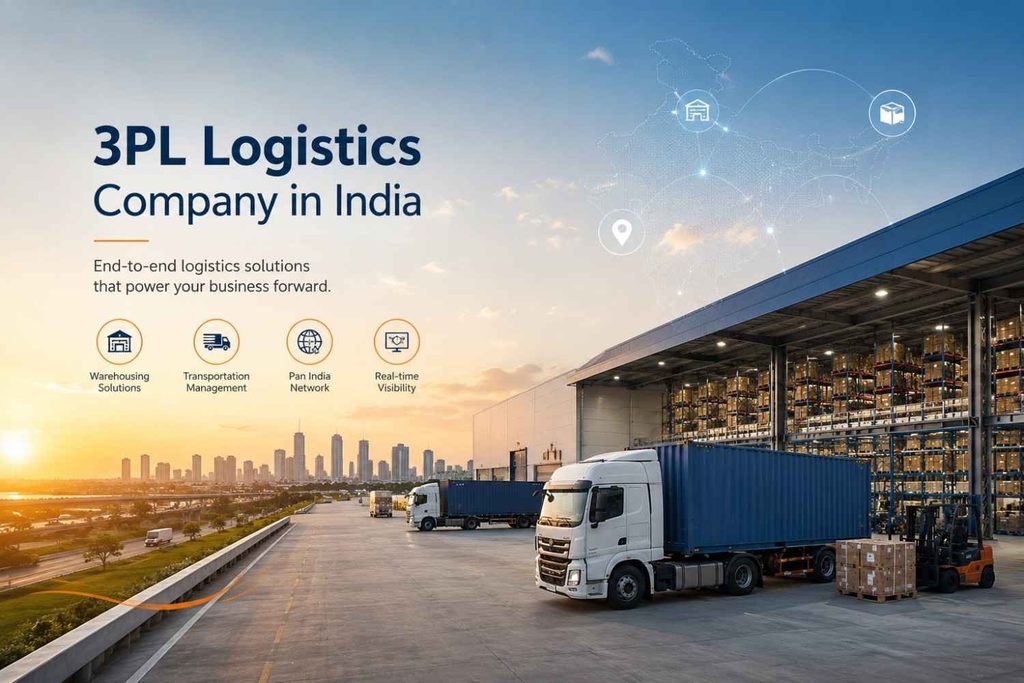
A business can survive a few logistics mistakes when it is small. At higher volumes, the same mistakes get expensive. A delayed dispatch breaks a customer commitment, inaccurate inventory ties up working capital, and poor transportation planning quietly eats into margins. This is where choosing the right 3PL logistics company in India becomes more than an outsourcing decision.
India’s third-party logistics market is expanding fast on the back of this shift. It is currently estimated at around USD 38 billion and projected to cross USD 50 billion by 2031, driven largely by e-commerce growth, multi-modal infrastructure upgrades, and rising demand for real-time shipment visibility. The real value of a 3PL partner in this environment is not just moving products or providing warehouse space. It is building an operation that stays dependable when order volumes shift, new locations get added, and things go wrong.
Why the 3PL Decision Matters More as a Business Grows
Most businesses start small: one warehouse, a few transporters, an internal team handling coordination. That works until shipment volumes increase and the team ends up chasing transporters and reconciling stock instead of running the business.
A 3PL partner can absorb much of that burden, but outsourcing doesn’t automatically create efficiency. A poorly selected provider introduces new problems, especially when its processes don’t match the client’s needs. The best 3PL relationship feels less like handing over logistics and more like adding an experienced operations team.
A practical example: A mid-sized apparel brand handling 800 orders a day in-house outsourced fulfillment as it scaled toward 4,000 orders during a festive sale. The first provider’s picking process was built for bulk B2B cartons, not single-unit e-commerce packing, so order accuracy dropped and the brand lost two weeks mid-peak switching providers. The lesson: a provider’s operating model needs to match the client’s actual order profile before volume ramps up, not after.
What a Capable 3PL Should Really Handle
A capable 3PL logistics company in India connects multiple logistics activities inbound transportation, receiving, warehousing, inventory control, fulfillment, packing, dispatch, distribution, reverse logistics rather than treating each as isolated. What matters is what happens between these stages: a wrong inventory record starts the problem in the warehouse; a late vehicle assignment creates a second delay downstream. The real question is never whether problems will happen, but how fast a provider identifies and resolves them.
Inventory Accuracy Matters More Than Warehouse Size
Many businesses evaluate providers mainly on warehouse size, but space alone does not solve inventory problems. If the system shows 300 units available and the warehouse team can physically locate only 270, those 30 missing units create delayed orders, unnecessary replenishment, and reconciliation work.
This is why inventory management logistics services need strong operating discipline: controlled receiving, clear storage locations, verified picking, and regular cycle counts instead of an annual stock check that discovers problems too late. Software helps, but it cannot fix poor physical processes. A useful test: ask what happens when physical stock doesn’t match system stock. The answer reveals more about warehouse discipline than any sales presentation.
Affordable Doesn’t Mean Cheapest Quote
Businesses naturally want affordable 3PL logistics solutions, but the lowest quoted rate isn’t the lowest logistics cost. A provider might offer cheap storage but charge heavily for handling, or attractive transportation rates with frequent reattempts and inefficient routes. A fair comparison includes warehousing, transportation, handling, returns, damages, technology charges, reattempts, and the internal manpower needed to coordinate the provider.
Scalability matters just as much. A provider performing well at 1,000 orders a month should be able to explain what happens at 5,000 or 10,000 added warehouse capacity, additional manpower, and higher transportation capacity during peaks. If those answers aren’t clear, the provider may suit today’s business but not next year’s.
Good 3PL vs Poor 3PL
| Area | Good 3PL Partner | Poor 3PL Partner |
| Inventory accuracy | Regular cycle counts, verified picking | Relies on annual stock checks |
| Pricing | Transparent, all-inclusive cost breakdown | Low base rate, hidden handling/reattempt charges |
| Scalability | Clear plan for 5x–10x volume growth | Vague answers about peak-season capacity |
| Exception handling | Defined escalation process with ownership | No clear owner when something goes wrong |
| Technology | Real-time visibility, ERP integration | Manual updates, delayed shipment data |
| End-to-end scope | Explicit ownership at every stage | “End-to-end” excludes inbound or reverse logistics |
End-to-End Services Need Clear Ownership
The phrase end-to-end 3PL logistics services doesn’t mean the same thing everywhere. One provider may include warehousing, transportation, fulfillment, and returns; another may call itself end-to-end while leaving inbound transportation or reverse logistics to the client. That difference matters during operational problems.
Before signing, map the complete movement of goods and identify who owns each stage: inbound verification, damaged stock records, customer returns, replacement shipments, and communication when a delivery appointment is missed. These are not contractual formalities; they determine how fast problems get resolved. If two teams both assume the other owns a task, the shipment gets stuck somewhere in between.
How to Evaluate a Third-Party Logistics Service Provider
Comparing quotations is not enough. Where possible, visit the provider’s warehouse and watch how goods are received, stored, picked, and dispatched. A warehouse visit is often more revealing than a sales deck. Check the technology setup too: ERP integration, shipment update frequency, and digital proof of delivery.
Before finalizing a partner, evaluate:
- Inventory accuracy and warehouse controls
- Transportation coverage and delivery performance
- Complete pricing structure, including hidden charges
- Technology integration and shipment visibility
- Peak-season scalability
- Returns and exception management
- Communication and escalation procedures
A controlled pilot testing selected routes, products, or locations before a full transfer often exposes practical issues before they become expensive.
3PL Is Becoming More Data-Driven
Real-time tracking, digital proof of delivery, and inventory analytics give businesses far better visibility than before, but visibility isn’t control a dashboard showing a delayed vehicle still needs a human decision on whether to contact the customer, reroute, or reschedule. Specialization is growing too: healthcare and pharma logistics is now one of the fastest-growing segments in India’s 3PL market, expanding faster than the overall industry as export mandates and cold-chain compliance push more temperature-sensitive shipping toward certified providers.
Expectations are shifting toward continuous visibility rather than updates only when something breaks, along with faster communication and measurable service performance. A provider increasingly needs to understand the client’s specific business model. A seasonal retailer needs a different approach than an industrial manufacturer with predictable bulk shipments.
Conclusion
Selecting a 3PL logistics company in India is ultimately a decision about operational reliability, accurate inventory management, dependable transportation, scalable operations, and clear ownership when problems occur. Don’t choose a provider because its quotation is lower; look at the warehouse, ask difficult questions, and test on a smaller scale first.
For e-commerce businesses wanting a technology-driven shipping layer, providers like iThink Logistics offer a way to manage multiple couriers and tracking through a single platform.
Logistics rarely fails during the easy shipments. It fails when demand spikes suddenly, inventory doesn’t match the system, or a customer changes requirements last-minute and that’s where a genuinely capable partner proves its value.
Frequently Asked Questions
1. What does a 3PL logistics company in India provide?
Ans. A 3PL provider can manage transportation, warehousing, inventory, fulfillment, distribution, and returns depending on the agreed scope. The goal is simplifying logistics while giving the business better control and visibility.
2. How do affordable 3PL logistics solutions reduce business costs?
Ans. They reduce the need to maintain in-house logistics infrastructure and staff, but total cost should include transportation, handling, storage, returns, reattempts, technology, and internal coordination effort.
3. Why is inventory management important in 3PL?
Ans. Poor inventory accuracy causes stockouts, delayed orders, unnecessary purchasing, and financial discrepancies. Strong receiving, storage, picking, and cycle-counting processes prevent these issues.
4. What are end-to-end 3PL logistics services?
Ans. They can cover inbound transportation, warehousing, inventory management, fulfillment, dispatch, distribution, and returns. The exact scope should always be confirmed directly with the provider.
5. How should businesses select a third-party logistics service provider?
Ans. Evaluate warehouse processes, inventory accuracy, transportation performance, technology, pricing, scalability, and exception handling. A warehouse visit and a pilot project provide useful evidence before a long-term commitment.