
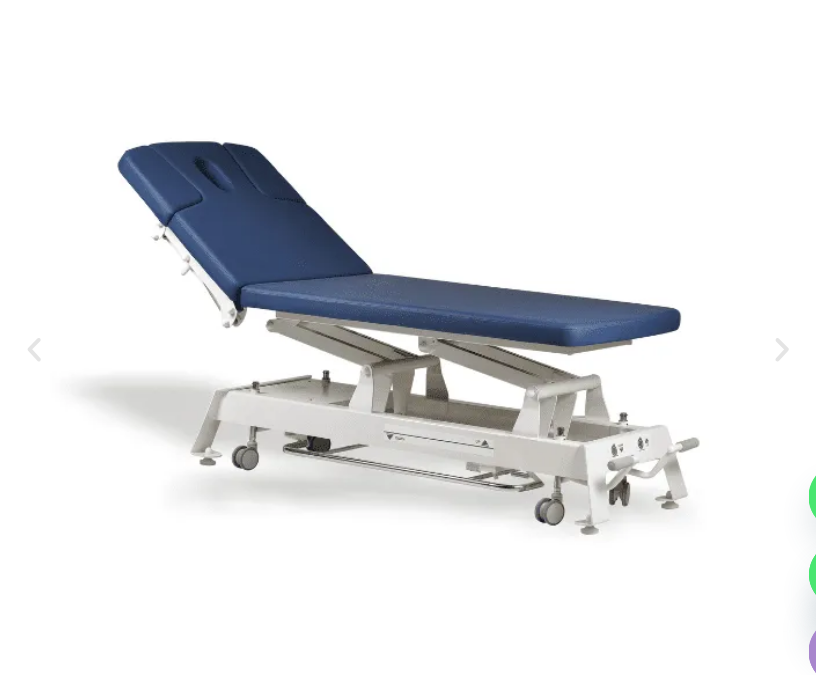
Most clinics buy physiotherapy tables the same way as they do other equipment. Someone pulls three quotes, compares the headline price, checks the section count, and signs off on whichever unit looks sturdy in the photographs. The table arrives, the therapists use it, and everyone moves on to the next line item. Then year three arrives and the picture changes. The height motor starts hesitating. The upholstery at the head end has gone tacky from repeated disinfectant wipes. And the replacement quote comes in at a budget that has no room for it.
Here is why this keeps happening. The specifications that decide how physiotherapy tables age are rarely the ones printed at the top of a brochure. They sit in the fine print, or they are not published at all. A procurement team that knows which questions to ask at the quotation stage can avoid a replacement cycle that arrives two years early.
Safe Working Load Versus Patient Distributed Load
These two numbers are not the same thing, and confusing them is common.
Patient Distributed Load Capacity refers to the weight distributed across the table surface during normal use. Safe Working Load covers the total load the structure can carry, including a therapist leaning in with body weight during mobilisation work.
A table rated for a 150 kg distributed load and a 200 kg Safe Working Load can support an 110 kg patient plus a therapist applying pressure through both arms. A table quoting only one figure leaves you guessing.
Ask for both. If the supplier can only produce one, treat that as an answer in itself.
Upholstery Resistance Ratings and Chemical Compatibility
This is the specification that fails first in most clinics.
Physiotherapy tables are wiped down between patients. Multiply that across a six-patient hour, and the surface takes a chemical load that furniture upholstery was never designed for.
What to confirm before purchase:
- UV resistance, which matters in treatment rooms with window exposure
- Fire resistance certification
- Abrasion resistance, tested against a stated cycle count
- Compatibility with the specific disinfectant your clinic uses
- Phthalate-free composition, increasingly requested in paediatric and antenatal settings.
Esthetica specifies UV, fire and abrasion-resistant upholstery across its treatment table range for this reason. Surface breakdown is a hygiene problem long before it becomes a cosmetic one. Cracked vinyl harbours bacteria that no wipe-down protocol can reach.
Frame Construction and Weld Quality
Photographs will not tell you this. Neither will a specification sheet that says nothing more than “steel frame.”
Precision-welded frames hold alignment through years of height cycling. Frames assembled with bolted joints develop play. The play produces the small lateral wobble that therapists start complaining about somewhere around month twenty.
Powder coating matters too. A semi-gloss finish to a stated RAL reference resists chipping better than a generic paint layer, and a chipped coating exposes steel in a room where liquids get spilt. Ask what the frame is welded from, and ask what the coating specification is. Vague answers usually mean the manufacturer has outsourced the frame.
Height Adjustment Mechanism and Control Access
Therapists adjust table height dozens of times a day. The mechanism is a durability question and a working-day question at the same time.
Three arrangements are common:
- Wired foot controllers with plus and minus buttons, workable for stationary setups
- Hands-free foot control operable from either side of the table
- Manual gas spring adjustment on backrests and headrests, separate from the base height system
The hands-free arrangement matters more than it sounds. A therapist with both hands on a patient cannot reach a wired pedal. The Parth 4-Section Physiotherapy Table offers this in its Pro configuration, with a Basic configuration for clinics where a wired controller is sufficient.
The more useful question is not which mechanism is better. It is the number of height changes the actuator is rated for.
Electrical Safety Certification for Clinical Settings
Physiotherapy tables with motorised adjustment are electrical medical equipment. That places them under IEC 60601-1 for general safety and IEC 60601-1-2 for electromagnetic compatibility.
Many domestic suppliers do not test to these standards. Some claim compliance without documentation.
This becomes a live problem during accreditation audits, and a serious one if your clinic operates equipment near diagnostic devices sensitive to electromagnetic interference.
Request the certification reference. A manufacturer testing to these standards will provide it without hesitation.
Mobility Systems and Floor Protection
Fixed tables and mobile tables solve different problems, and clinics often buy the wrong one.
Four permanent castors give you a table that moves easily. It also gives you a table that shifts slightly under lateral pressure, which some therapists dislike during manipulation work.
A lift-and-lock mobility system sits between the two. The table rests solidly on the floor during treatment and lifts onto wheels when it needs to move. Multi-therapist practices that reconfigure rooms benefit from this arrangement more than single-bay clinics do.
Think about how often your rooms actually change. The answer is usually less than people expect.
Next Steps
The gap between a table that lasts four years and one that lasts twelve is rarely price. It is a specification detail that nobody asked about at the quotation stage.
Physiotherapy clinics that see six or more patients per hour place more mechanical load on their tables than most hospital departments do. Buy accordingly, and ask the awkward questions early.